3 магазини · 0+ продукти

сравнение: Michelin Primacy 5 срещу. Hankook Ventus Prime 4 (2026)

2 mutual test(s) with detailed data

Michelin dominates in refinement, efficiency and wet safety; Hankook hits back hardest when roads are dry.

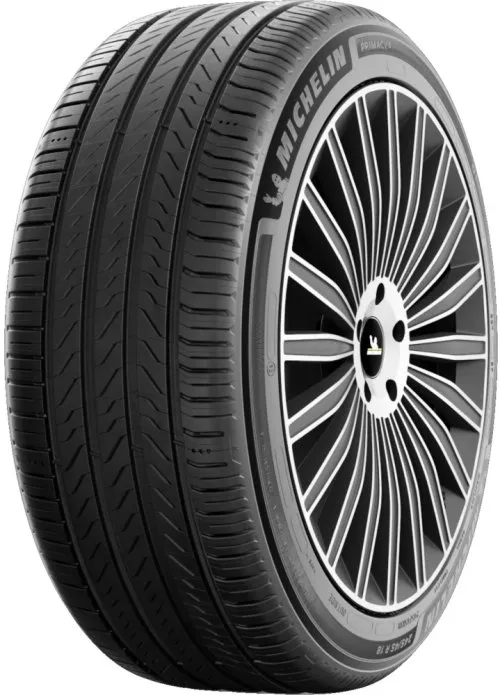
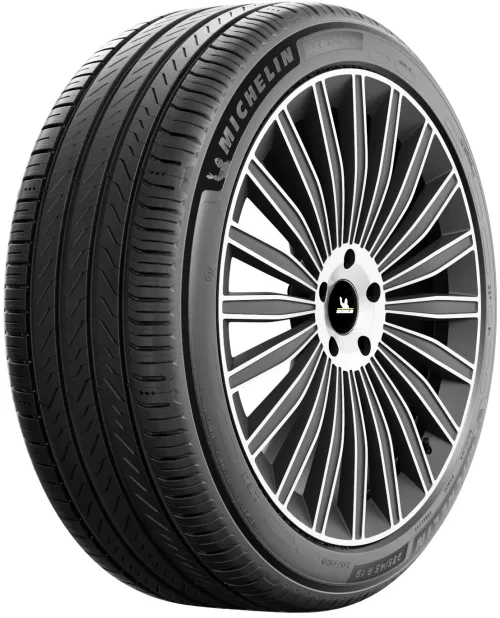
The Michelin Primacy 5 occupies the centre of Michelin's touring range, directly succeeding the Primacy 4+, and it arrives with a clear and deliberate identity: "Safety made to last." Michelin's own marketing leans hard on longevity and wet-road confidence — the brand claims 4% shorter wet braking when new versus its predecessor and promises that performance is maintained all the way to the wear indicators, thanks to its EverGrip and EverTread compound technologies. With 82 sizes from R16 to R21 and an explicit EV-suitability endorsement, it is engineered for family saloons, crossovers, and executive cars where refinement, efficiency, and consistent long-term safety matter most. Its 4.8 out of 5 average from 899 owner reviews on Michelin's own platform suggests this positioning resonates strongly.

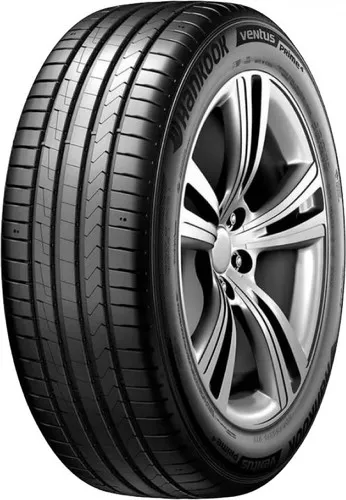
The Hankook Ventus Prime 4, successor to the Ventus Prime3 K125, comes from a different tradition. Hankook's Korean engineering heritage leans toward dynamic performance — the Prime 4 is built to feel alive in your hands, with an emphasis on short braking distances, neutral handling balance and high lateral limits. Its 97-size range spanning R13 to R22 is notably broader than the Michelin's, making it accessible to everything from a city hatchback to a large SUV. It positions itself as value-premium: a tyre that can embarrass pricier European rivals in dry-grip disciplines while coming in at a meaningfully lower price point.

The fundamental character difference between these two tyres is clear and consistent across all the test data: the Michelin Primacy 5 is a comfort, efficiency and wet-safety specialist that carries a real and measurable weakness in dry stopping distances, while the Hankook Ventus Prime 4 is a dynamics-first performer that falls behind on cabin noise, rolling resistance, aquaplaning, and long-term running costs. In all three direct comparison tests where they met, Michelin finished ahead — but understanding exactly why the Hankook belongs in this conversation is the key to making the right choice for your driving.

Michelin Primacy 5
подходяща за
Wet-climate drivers needing reliable aquaplaning protection Long-distance motorway commuters valuing cabin quiet High-mileage drivers prioritising fuel savings and longevity Family car and EV owners wanting consistent wet safety
не е идеална за
Drivers prioritising the shortest possible dry braking Performance-focused drivers on predominantly dry roads Cold-climate drivers below 20°C where compound feels numb
Hankook Ventus Prime 4
подходяща за
Dry-climate drivers demanding short stopping distances Budget-conscious buyers wanting genuine premium-level grip Sporty everyday drivers prioritising dynamic handling Wide fitment needs from small hatchbacks to large SUVs
не е идеална за
High-rainfall regions where aquaplaning risk is frequent Drivers sensitive to motorway cabin drone on long trips EV owners maximising range through low rolling resistance High-mileage drivers wanting maximum tread longevity

Test profile

Michelin
Primacy 5
Hankook
Ventus Prime 4
Брой тестове
7
15
Best position
#1
#2
Average position
4.4
6.1
най-нов тест
2026
2026
налични размери
170
176

сравнение на представянето

средно от 2 теста

представяне на мокро
Confidence
Michelin Primacy 5
84%
Michelin
Primacy 5
Hankook Ventus Prime 4
85%
Hankook
Ventus Prime 4
спиране на мокра настилка
Michelin Primacy 5
91%
Hankook Ventus Prime 4
88%
мокра обработка
Michelin Primacy 5
77%
Hankook Ventus Prime 4
83%
аквапланинг по дължина
Michelin Primacy 5
83%
Hankook Ventus Prime 4
83%
аквапланинг при странично движение
Michelin Primacy 5
85%
Hankook Ventus Prime 4
85%

Wet roads are the Michelin Primacy 5's native environment, and the depth of its advantage extends well beyond the braking numbers alone. On pure wet stopping performance, the two tyres are remarkably close: the Michelin scores 82.0 versus the Hankook's 81.1 — less than a point apart, reflecting genuine competence from both contenders. Die Reifentester measured the Michelin at 34.9 metres in wet braking, a strong absolute result that validates Michelin's marketing claim of meaningful improvement over the Primacy 4+. The EU label reinforces the picture: 98% of the Primacy 5's size range carries an A wet-grip rating, the highest classification possible. By contrast, only 54% of Hankook Ventus Prime 4 sizes achieve an A, with 36% rated B and a further 10% spread across C and D. For buyers in less common tyre sizes, this means the Michelin is far more likely to deliver top-tier wet safety regardless of fitment.

Where the gap opens decisively is in aquaplaning resistance, a discipline that matters most in the kind of sudden, heavy summer downpour that modern roads cannot fully drain. The Michelin scores 84.9 against the Hankook's 74.4 — a 10-point margin that is not subtle. Tyre Reviews measured the Primacy 5's straight aquaplaning speed at 76.97 km/h, a strong result underpinned by Michelin's EverGrip sculpture, which is engineered to maintain water channel efficiency even as the tread wears down. The longitudinal aquaplaning score of 88.6 and crosswind aquaplaning score of 81.3 confirm this is a tyre built to hold the road in standing water. The Hankook's longitudinal aquaplaning score of 78.9 is respectable but measurably behind, and multiple test panels noted it as the tyre's most significant wet limitation.

In lateral wet handling — the ability to carry speed through a wet corner with confidence — the Hankook actually posts a slight edge: its wet-handling-objective score of 87.5 compares to the Michelin's 84.0, and in wet circle cornering the Hankook scores 86.2. The Michelin, despite its wet-safety reputation, drew some tester criticism for understeer tendencies in both wet and dry handling tests, and occasional instability under fast evasive manoeuvres. Automotorsport praised its balanced, safe overall wet-road character with good cornering reserves, but the data shows it is not the sharpest wet handler. For the vast majority of drivers, the Michelin's aquaplaning buffer and near-universal Class A wet grip deliver the more complete rainy-weather safety package; only in the lateral-grip-focused wet handling does the Hankook edge ahead.

представяне на сухо
Confidence
Michelin Primacy 5
85%
Michelin
Primacy 5
Hankook Ventus Prime 4
78%
Hankook
Ventus Prime 4
сухо спиране
Michelin Primacy 5
74%
Hankook Ventus Prime 4
71%
обработка в сухо състояние
Michelin Primacy 5
96%
Hankook Ventus Prime 4
85%

On a dry road, the Hankook Ventus Prime 4 is the more urgent, capable performer, and the numbers make the case without equivocation. The Hankook posts a dry-braking score of 85.6 against the Michelin Primacy 5's 68.2 — a 17-point gap that stands as one of the most striking discipline disparities in the premium summer category. The only specific measured dry braking distance in the test data belongs to the Michelin: 37.23 metres from Die Reifentester 2026, where it was recorded as the weakest dry stopper among all summer tyres tested. At 100 km/h, every metre of braking advantage is real and consequential — a 3-to-4-metre gap represents roughly the length of a family estate car sitting between you and the vehicle you're about to hit. The Hankook's dry-handling-objective score of 97.5 is exceptional by any standard and points to a tyre with high lateral limits, precise initial turn-in, and stable, communicative behaviour at the edge of grip. One owner who switched from a Continental SportContact 2 reported the Hankook sits the limit some 20 km/h higher, with no tendency to understeer — feedback that aligns precisely with the objective testing.

What makes the Michelin's dry story more nuanced is that subjective dry handling assessments tell a partially different tale. In AvD's 2026 test, the Primacy 5 received the joint-best dry handling score of 4.7 out of 5 — shared with Pirelli — suggesting that at real-world road speeds and in normal driving situations, the tyre communicates confidence and feels well-balanced. Its dry-handling average of 84.3 is genuinely respectable. The weakness is specific to peak braking friction: Michelin's compound is tuned for wet grip retention and minimal rolling resistance, and those engineering priorities come at the cost of the high-friction dry contact patch that the Hankook's compound delivers. ADAC's 2026 assessment rated the Primacy 5's dry performance at just 3.2 — the weakest area for an otherwise competitive tyre — while the Ventus Prime 4 scored 2.4 in the same discipline. The gap is consistent and systematic across independent tests, not an outlier.

The practical takeaway is this: at speeds and situations typical of everyday driving, the Michelin's dry balance is competent and confidence-inspiring. In an emergency stop, however, the Hankook stops measurably shorter, and that gap matters when the margin between a near-miss and a collision is measured in centimetres. Drivers who regularly use motorways at speed, live in hot and dry climates, or simply weight braking performance above all other criteria will find the Hankook the more honest choice when the roads are bone dry.

комфорт и шум
Confidence
Michelin Primacy 5
83%
Michelin
Primacy 5
Hankook Ventus Prime 4
74%
Hankook
Ventus Prime 4
външен шум
Michelin Primacy 5
83%
Hankook Ventus Prime 4
74%

Cabin refinement is the single discipline where the Michelin Primacy 5's dominance is most absolute. Its noise score of 89.3 compared to the Hankook's 77.3 represents a 12-point advantage that is immediately audible inside the car. Tyre Reviews measured the Primacy 5 at just 70.9 dB interior pass-by noise — a genuinely hushed result for a summer tyre. At the other end of the comparison, the Motor 2026 summer tyre test identified the Hankook Ventus Prime 4 as the loudest tyre in the entire test field at 75.5 dB. That 4.6 dB difference may look modest on paper, but on a logarithmic decibel scale it translates to a meaningfully louder cabin — the kind of drone that becomes fatiguing across a two-hour motorway run. The Michelin's exterior noise score of 94 and interior score of 87 represent a best-in-class result; the Hankook's 78 and 77 are functional but clearly outclassed. It is worth noting, though, that one Hankook owner with 8,000 km on a Honda Civic described the Prime 4 as quiet in everyday use — a reminder that the gap is most pronounced at sustained highway speeds, less so in urban driving.

Ride comfort broadly mirrors the noise picture: 85.1 for the Michelin, 80.0 for the Hankook. However, there is a nuance worth noting: the Michelin received criticism in one 2026 test for low inherent damping — the sidewall absorbs road frequencies efficiently for noise but can feel slightly brittle over sharp, isolated impacts like expansion joints or sudden road blemishes. At low temperatures, at least one real-world owner noted the Primacy 5 can feel wooden, citing its apparent design optimisation for warmer European conditions above 25°C. The Hankook drew a rating of 4.3 for comfort at AvD and is described as having a balanced profile — not exceptionally plush, but not harsh either, with average comfort noted as its honest self-assessment.

On running costs and total ownership value, the Michelin Primacy 5 is in a different league. Its rolling resistance score of 83.8 versus 75.0 for the Hankook reflects a tyre with fundamentally lower energy consumption: Die Reifentester measured it at just 6.3 kg/t — tied with Bridgestone for best in the 2026 test — and Tyre Reviews independently recorded 7.00 kg/t, its second-best result. ADAC 2026 awarded the Primacy 5 the best environmental rating in a 16-tyre field, recognising both rolling resistance and longevity. The Michelin's EU fuel label is dominated by B and A ratings (70% B, 20% A), while the Hankook's range skews C (52%) with only 10% reaching A. The mileage score tells the same story: 85 for the Michelin, 74.2 for the Hankook, with Michelin's own 18% mileage improvement over the Primacy 4+ baked into the compound design. The Michelin commands a higher purchase price — ADAC noted approximately €165 per tyre — but lower fuel consumption and a longer service life meaningfully offset that premium over the course of ownership. The Hankook delivers genuinely good value for money at point of purchase, but its higher rolling resistance and faster wear rate make it the more expensive tyre to run over 40,000 to 50,000 kilometres.

икономия
Confidence
Michelin Primacy 5
88%
Michelin
Primacy 5
Hankook Ventus Prime 4
76%
Hankook
Ventus Prime 4
съпротивление при търкаляне
Michelin Primacy 5
90%
Hankook Ventus Prime 4
79%
пробег
Michelin Primacy 5
85%
Hankook Ventus Prime 4
73%

графика на представянето (паяк)

заключение

The test record leaves little room for ambiguity. Across the three direct comparison tests where these two tyres competed — ADAC 2026, AvD 2026, and Aftonbladet 2025 — the Michelin Primacy 5 finished ahead of the Hankook Ventus Prime 4 in all three: 7th vs 11th in a 16-tyre ADAC field, 4th vs 8th in a 15-tyre AvD test, and 1st vs 6th in Aftonbladet's 10-tyre comparison. The overall ratings — 86/100 versus 76/100 — reflect a consistent, repeatable performance gap driven by the Michelin's commanding leads in refinement, efficiency, aquaplaning resistance, and wet-grip consistency. For most drivers across most of Europe, the Michelin Primacy 5 is the more complete, more accomplished tyre, and it earns that verdict through objective, independent data rather than badge prestige.

There is, however, a meaningful and legitimate case for the Hankook Ventus Prime 4 — and it rests on a single but critical discipline. A dry-braking score of 85.6 against the Michelin's 68.2, combined with a dry-handling-objective of 97.5, describes a tyre that is genuinely, measurably safer when the road is dry and a hard stop is required. In southern Europe, where summers are long, rain is rare, and heat is constant, that trade-off may be entirely rational. The Hankook also comes in at a lower initial price, covers a broader size range — R13 to R22 versus the Michelin's R16 to R21 — and offers competitive wet handling in corners, where its 87.5 objective score edges the Michelin's 84.0. Owners consistently rate it highly, with a 91/100 average from Tyre Reviews users, praising its balanced, grip-rich everyday character.

The final call: buy the Michelin Primacy 5 if you drive in a wet or mixed climate, cover high annual mileage, prioritise a hushed cabin, or plan to keep your tyres for their full service life. Its wet-safety package, rolling resistance and longevity make it the smarter long-term investment. Buy the Hankook Ventus Prime 4 if dry-road confidence is your primary safety criterion, your budget is tighter, or you live where summer genuinely means summer. The Michelin wins the comparison — but the Hankook wins the dry road, and in some conditions, that is the only road that matters.
тестове, използвани в сравнението

организациясезонгодинаразмер
AvDAvD
лято
2026215/55 R17преглед
ADACADAC
лято
2026225/50 R17преглед

размери и цени

сравнете цените за всички налични размери на тези гуми.

размер Michelin Primacy 5 Hankook Ventus Prime 4 %
205/55 R16
205/55 R16
205/55 R16
205/55 R16
205/55 R16
виж общото сравнение

добавете към сравнението

Popular brands
ново сравнение

GumiLab.eu

ВЗЕМИ

GumiLab.eu

Сравнете гуми, прочетете тестови резултати и намерете най-добрите цени — всичко в едно приложение.