3 магазини · 0+ продукти

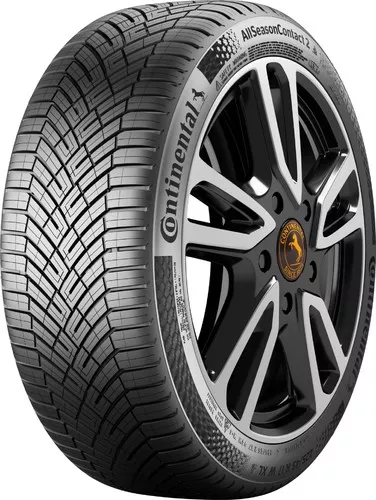
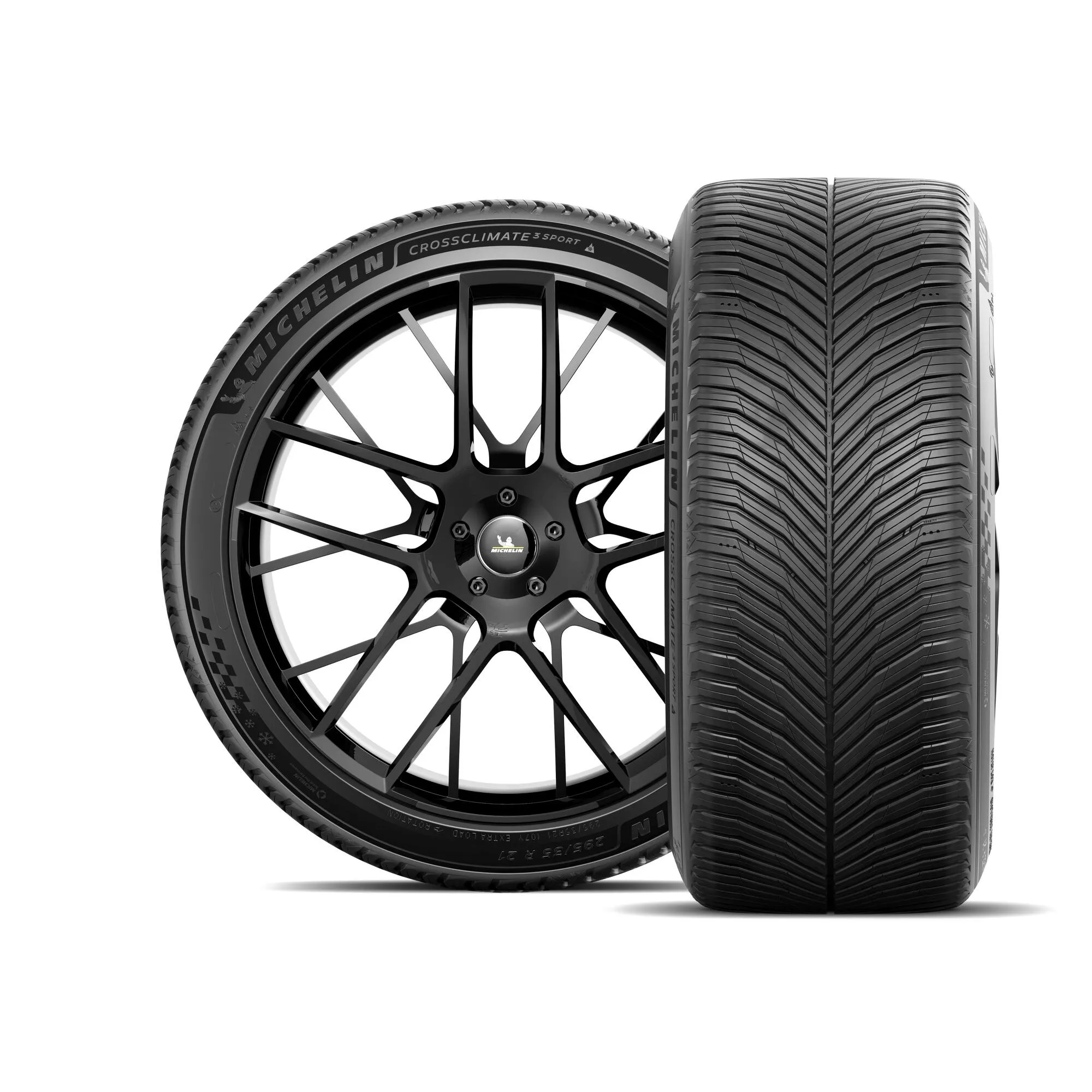
сравнение: Michelin CrossClimate 3 Sport срещу. Continental AllSeasonContact 2 (2026)

1 mutual test(s) with detailed data

Michelin dominates dry braking; Continental leads wet grip, comfort, and long-term value.

The Michelin CrossClimate 3 Sport and the Continental AllSeasonContact 2 both occupy the premium all-season segment, but they arrive from genuinely different design philosophies and address different driver priorities with remarkable clarity. Michelin's entry is unambiguously performance-first: available exclusively in R18 through R22 rim diameters, carrying original-equipment status on the Alpine A390, and built around two proprietary technologies — Thermal Adaptive Tread Compound 2.0 and Dynamic Response Technology — the CrossClimate 3 Sport is the high-performance evolution of the Michelin CrossClimate lineage, recast specifically for UHP applications. It earned a test win at TyreReviews' 2025 UHP all-season test and an "exemplary" rating from AutoBild in 225/40 R18, and its customer satisfaction score of 4.8 out of 5 across 491 reviews reflects a genuinely enthused owner base. The Continental AllSeasonContact 2, successor to the original AllSeasonContact, takes a fundamentally different approach: its 131-size range stretches from R15 to R22, its expert positioning describes it as leaning toward mileage, and its headline result is ADAC 2026's best overall grade in a comprehensive balanced all-season comparison. Continental has engineered a tyre that asks "how reliably will this serve you over 40,000 kilometres?"; Michelin has engineered one that asks "how precisely can you place the car through a wet corner at pace?"

The single biggest character difference between these two premium all-season tyres is this: the CrossClimate 3 Sport is built around dry braking authority, dynamic steering precision, and winter-condition confidence, accepting meaningful compromises in wet grip, cabin refinement, and treadwear to achieve them. The AllSeasonContact 2 is close to the inverse — a tyre that leads in wet braking, dominates in comfort and noise suppression, and delivers dramatically superior long-term value, but concedes meaningfully to the Michelin in dry stopping distances and outright handling feel on warm asphalt. Understanding that trade-off before selecting either tyre is essential, because both are strong products that happen to be strong in different ways.

Michelin CrossClimate 3 Sport
подходяща за
Performance car drivers prioritising dry braking authority Spirited drivers valuing precise steering feedback Winter commuters needing strong snow confidence EV owners on large-diameter performance wheels
не е идеална за
High-mileage drivers watching cost per kilometre Drivers prioritising wet braking above all else Comfort-focused motorists sensitive to road noise
Continental AllSeasonContact 2
подходяща за
Everyday drivers wanting balanced wet and dry safety High-mileage commuters seeking low running costs Comfort-conscious drivers sensitive to cabin noise EV and hybrid owners valuing refinement and efficiency
не е идеална за
Performance drivers expecting class-leading dry stops Sports car owners needing UHP dynamic response Drivers regularly pushing limits on dry circuits

Test profile

Michelin
CrossClimate 3 Sport
Continental
AllSeasonContact 2
Брой тестове
2
18
Best position
#3
#1
Average position
4.5
2.4
най-нов тест
2025
2026
налични размери
63
269

сравнение на представянето

представяне на мокро
Confidence
Michelin CrossClimate 3 Sport
77%
Michelin
CrossClimate 3 Sport
Continental AllSeasonContact 2
84%
Continental
AllSeasonContact 2
спиране на мокра настилка
Michelin CrossClimate 3 Sport
77%
Continental AllSeasonContact 2
84%
мокра обработка
Michelin CrossClimate 3 Sport
81%
Continental AllSeasonContact 2
88%
Завиване в мокър кръг
Michelin CrossClimate 3 Sport
75%
Continental AllSeasonContact 2
92%
аквапланинг по дължина
Michelin CrossClimate 3 Sport
77%
Continental AllSeasonContact 2
77%
аквапланинг при странично движение
Michelin CrossClimate 3 Sport
77%
Continental AllSeasonContact 2
77%

On wet roads, the performance hierarchy inverts — and the inversion is particularly striking given that the CrossClimate 3 Sport carries the higher EU wet grip label (A across 100% of its range) while the AllSeasonContact 2 is predominantly B-labelled. Real-world testing consistently tells a different story. In the same Autobild 2025 mutual braking comparison, the Continental stops in 44.9 metres on wet asphalt against the Michelin's 47.3 metres — 2.4 metres shorter, a gap of similar magnitude to the dry-road advantage running in the opposite direction. The underlying wet performance scores make this structural rather than incidental: Continental's wet-braking score of 88.5 against Michelin's 77, and an overall wet performance score of 84.8 against 77.9. The EU label, in this case, does not capture real-world wet-road stopping behaviour, and it is the measured distances and programme scores that matter for the driver.

Continental's wet handling advantage extends beyond the straight-line braking figures. An aggregated wet handling objective of 87 and a wet circle cornering score of 88 confirm what multiple test programmes describe: the AllSeasonContact 2 builds lateral grip on wet surfaces progressively, communicates its limits clearly, and corners with genuine confidence through wet roundabouts and rain-soaked bends. Aftonbladet specifically recognises it for best braking grip on cold wet asphalt — a meaningful endorsement from a market that experiences precisely those conditions across much of its driving year. The Michelin's wet handling is not alarming — owner reviews mention confidence in wet corners and reassuring stability — but its lower wet handling and wet braking scores mean the gap to the Continental is real and repeatable across independent evaluations.

Aquaplaning offers a minor nuance. The Continental scores 80 against the Michelin's 77, suggesting a modest overall advantage in water evacuation. However, several evaluations specifically single out curve aquaplaning as a mild limitation for the Continental — it is in straight-line aquaplaning at higher speeds that it performs more convincingly, while lateral aquaplaning generates a slightly earlier onset. The Michelin's aquaplaning performance sits broadly in line with its wider wet picture: adequate for everyday conditions, but not class-leading. Neither tyre is weak enough in this discipline to raise genuine concern for typical driving conditions, but buyers in regions prone to summer cloudbursts and standing water should note that neither is the segment reference for aquaplaning resistance.

представяне на сухо
Confidence
Michelin CrossClimate 3 Sport
90%
Michelin
CrossClimate 3 Sport
Continental AllSeasonContact 2
76%
Continental
AllSeasonContact 2
сухо спиране
Michelin CrossClimate 3 Sport
91%
Continental AllSeasonContact 2
64%
обработка в сухо състояние
Michelin CrossClimate 3 Sport
88%
Continental AllSeasonContact 2
88%

In the single head-to-head braking comparison where measured distances are available — Autobild 2025, conducted in 225/40 R18 across a field of 30 tyres — the CrossClimate 3 Sport stops in 38.8 metres on dry asphalt against the Continental's 41.5 metres. That 2.7-metre gap equates to roughly two thirds of a car length when braking from 100 km/h, and it is not a one-off result. The underlying dry-braking performance scores tell the same story with even greater emphasis: Michelin's 91 against Continental's 76.5, a gap that places the two tyres in categorically different tiers for this specific discipline. The Michelin's Dynamic Response Technology appears purpose-built to deliver this kind of authority — the compound and construction work together to maximise contact-patch loading under hard longitudinal deceleration, producing a braking response that is both short and progressive. It is the kind of performance that justifies Alpine selecting it as original equipment for a vehicle where driver confidence under deceleration is fundamental to the product promise.

Continental's dry picture requires a more careful reading, because the tyre is not weak in dry conditions in any general sense — its objective dry handling score of 98.5 in aggregated testing is exceptional, and testers across multiple evaluations describe direct, reassuring steering behaviour with good safety reserves at the limit on dry asphalt. The weakness is specifically dry braking rather than dry cornering, a distinction with real practical consequences. In emergency-stop scenarios on warm, dry roads — the conditions in which cars most often need to stop hard — the Continental simply does not match the Michelin's deceleration authority. In flowing cornering conditions, however, the AllSeasonContact 2 is genuinely composed and precise, and most everyday drivers will not encounter its dry-braking limitation in normal use. But for performance car owners or anyone who places a premium on stopping distance as a safety margin, the Michelin's 2.7-metre advantage in this single measured comparison carries real weight.

представяне на сняг
Confidence
Michelin CrossClimate 3 Sport
87%
Michelin
CrossClimate 3 Sport
Continental AllSeasonContact 2
85%
Continental
AllSeasonContact 2
спиране при сняг
Michelin CrossClimate 3 Sport
84%
Continental AllSeasonContact 2
84%
сцепление със снега
Michelin CrossClimate 3 Sport
92%
Continental AllSeasonContact 2
92%
обработка на снега
Michelin CrossClimate 3 Sport
88%
Continental AllSeasonContact 2
81%
завиване в кръг на сняг
Michelin CrossClimate 3 Sport
84%
Continental AllSeasonContact 2
84%

Both tyres carry 3PMSF certification and deliver genuine winter-grade capability rather than simply meeting the regulatory threshold — an important distinction in a segment where all-season claims vary widely in substance. The CrossClimate 3 Sport scores 86.7 for snow performance against the Continental's 85.1, a margin narrow enough to be considered broadly equivalent in real-world use. Michelin's Thermal Adaptive Tread Compound 2.0 is specifically described as maintaining compound flexibility across a range of temperatures, addressing the most common failure mode of underperforming all-season tyres in cold conditions — the compound going rigid and losing contact-patch conformity on cold mornings. Owner experience confirms genuine snow confidence: multiple CrossClimate 3 Sport reviewers specifically highlight excellent snow behaviour as a standout quality, and the tyre's Autobild 2025 characterisation as stark im Wintereinsatz (strong in winter use) alongside outstanding driving dynamics reflects consistent test-programme results.

Continental's AllSeasonContact 2 is not meaningfully weaker overall in snow — its snow traction score of 87 and snow handling objective of 96 place it among the strongest performers in the all-season segment for winter conditions. Tyre Reviews 2024 goes further, identifying the AllSeasonContact 2 as best in ice overall, a dimension where the Michelin's ice performance is not specifically quantified in the available data. Snow cornering (91.7) and snow traction (87) confirm a tyre that is precise and measured on packed snow rather than nervous or vague. For drivers in consistently cold northern European climates, the Continental's size range extending down to R15 also makes it accessible to vehicles that the Michelin, with its R18 floor, simply cannot serve. Both tyres are genuine four-season tools; the Michelin's advantage in snow is narrow and offset by the Continental's probable ice advantage and broader accessibility.

комфорт и шум
Confidence
Michelin CrossClimate 3 Sport
72%
Michelin
CrossClimate 3 Sport
Continental AllSeasonContact 2
81%
Continental
AllSeasonContact 2
външен шум
Michelin CrossClimate 3 Sport
75%
Continental AllSeasonContact 2
84%
комфорт при шофиране
Michelin CrossClimate 3 Sport
69%
Continental AllSeasonContact 2
78%

The comfort and running-cost comparison is where the two tyres diverge most dramatically, and where Continental's design philosophy pays its most visible dividends. The AllSeasonContact 2 scores 100 for both ride comfort and cabin noise — the maximum in its category — against the Michelin's 75 for each. This is not a marginal gap: it is a structural difference rooted in construction philosophy. The CrossClimate 3 Sport's UHP architecture — larger rim diameters, stiffer sidewalls engineered to transmit dynamic response rather than absorb road texture — produces the firm ride and elevated road noise that typically accompanies performance tyre design. Owner experience confirms the Continental's refinement credentials in specific, concrete terms: an AllSeasonContact 2 user moving from premium summer tyres describes the tyre as "incredibly quiet" on an Audi A3, to the point of near-silence in electric mode; another, switching from Hankook summer rubber, identifies ride quality as the most positive surprise. Autobild testers independently note a leises Abrollgeräusch (quiet rolling noise) as a defined characteristic. CrossClimate 3 Sport owners do occasionally mention the tyre as quieter than expected for its performance positioning, but the scores and the pattern across evaluations are unambiguous.

Running costs and treadwear longevity translate the comfort gap into a total cost-of-ownership comparison that strongly favours the Continental. The CrossClimate 3 Sport's mileage score of 51 against the AllSeasonContact 2's 86.3 represents one of the largest treadwear differentials in this comparison, and it is reinforced by Autobild's finding that the Michelin carries the highest cost per kilometre of all candidates in the 2025 test — a pointed verdict from a publication that takes long-term economics seriously. Tyre Reviews 2024 independently identifies the Continental as having the lowest wear on test and the best overall value proposition, and ADAC notes strong environmental performance linked to low wear and rolling resistance. The Michelin's rolling resistance score of 92 is genuinely impressive — 84% of its range carries a B EU fuel label — and partially offsets the tyre cost equation through measurable fuel savings. The Continental's rolling resistance of 85.5 is strong but not quite at that level; nonetheless, the combination of superior mileage and strong rolling resistance means the AllSeasonContact 2's total lifecycle cost per kilometre is substantially lower despite both tyres sitting at similar premium price points. For a tyre that buyers typically leave on the car year-round for three or four years, that mileage gap matters considerably.

икономия
Confidence
Michelin CrossClimate 3 Sport
65%
Michelin
CrossClimate 3 Sport
Continental AllSeasonContact 2
68%
Continental
AllSeasonContact 2
съпротивление при търкаляне
Michelin CrossClimate 3 Sport
92%
Continental AllSeasonContact 2
75%
горивна ефективност
Michelin CrossClimate 3 Sport
51%
Continental AllSeasonContact 2
69%
пробег
Michelin CrossClimate 3 Sport
51%
Continental AllSeasonContact 2
59%

графика на представянето (паяк)

Tread pattern comparison

Michelin CrossClimate 3 Sport
Continental AllSeasonContact 2
Drag to compare · Scroll to zoom · Double-click for 2×

заключение

The choice between these two premium all-season tyres is unusually straightforward once the design philosophies are understood. The CrossClimate 3 Sport is the right tyre for drivers of performance-oriented vehicles — anything on R18 or larger wheels where dry braking authority, precise steering response, and dynamic handling feel genuinely shape the driving experience. Its 2.7-metre dry-braking advantage in the single mutual measured comparison, combined with its highest dry-braking score in category and its specific deployment as original equipment on the Alpine A390, confirm it as the only all-season tyre in this comparison that was designed to enhance rather than simply not compromise a performance car's dynamic character. Its strong snow scores and 3PMSF certification complete a genuinely capable winter profile, and its EU A wet grip label, while not reflected in the wet braking distance measured against the Continental, does confirm adequate wet performance for everyday conditions. The trade-offs are real — higher cost per kilometre, less refinement, longer wet braking distances — but they are acceptable trade-offs if performance is the primary purchase criterion.

For the majority of all-season buyers, however, the Continental AllSeasonContact 2 makes the more complete and more compelling argument across a wider range of driving conditions and priorities. Its wet braking and handling advantage is consistent and meaningful — 2.4 metres shorter in the single mutual comparison, substantially higher wet-performance scores across the board — and for a year-round tyre used heavily on wet autumn and spring roads, that matters more than the parallel dry-braking gap. Its comfort and noise scores represent the best in this comparison by a considerable margin, its mileage advantage is dramatic, and its ADAC 2026 best overall grade reflects a tyre that testers are comfortable recommending without qualification for most drivers and most conditions. The mild aquaplaning limitation in curves and the longer dry braking distances are real but not large enough to create genuine safety concern in normal everyday driving. At equal purchase prices, the Continental returns materially lower cost per kilometre and meaningfully superior day-to-day refinement.

The verdict is clear: if you drive a performance car and your priority is dynamic confidence on dry roads and in winter conditions, the CrossClimate 3 Sport is the tool for you and the running-cost premium is the price of that capability. If you want the best all-round wet-weather safety, the quietest and most comfortable daily experience, and the lowest cost per kilometre from a premium all-season tyre, the AllSeasonContact 2 is the stronger choice — and for most drivers, that is exactly the right answer.

тестове, използвани в сравнението

организациясезонгодинаразмер
AutobildAutobild
всесезонни
2025225/40 R18преглед

размери и цени

сравнете цените за всички налични размери на тези гуми.

размер Michelin CrossClimate 3 Sport Continental AllSeasonContact 2 %
205/55 R16
205/55 R16
205/55 R16
205/55 R16
205/55 R16
виж общото сравнение

добавете към сравнението

Popular brands
ново сравнение

GumiLab.eu

ВЗЕМИ

GumiLab.eu

Сравнете гуми, прочетете тестови резултати и намерете най-добрите цени — всичко в едно приложение.