3 магазини · 0+ продукти

сравнение: Continental EcoContact 6 срещу. Hankook Ventus Prime 4 (2026)

1 mutual test(s) with detailed data

Hankook stops 4.9 metres shorter in the wet — Continental leads on economy and tread life.

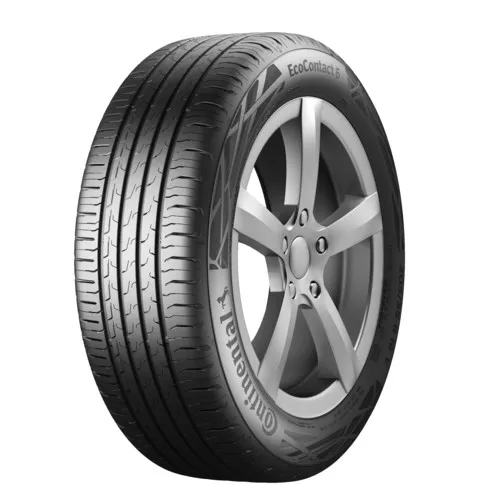
The Continental EcoContact 6 and the Hankook Ventus Prime 4 both carry premium summer tyre badges, but they represent fundamentally different answers to what a premium tyre should prioritise. Continental's EcoContact 6 — successor to the ContiEcoContact 5 and now itself superseded by the EcoContact 7 — was engineered with a clear mandate: minimise rolling resistance and maximise tread life without completely sacrificing safety. Its compound is built for efficiency above all else, earning a perfect rolling resistance score of 100 and placing 55% of its 179 dimensions on a fuel economy A label. The target driver is the eco-conscious commuter who accumulates serious annual mileage and wants measurably lower fuel bills across the tyre's life.

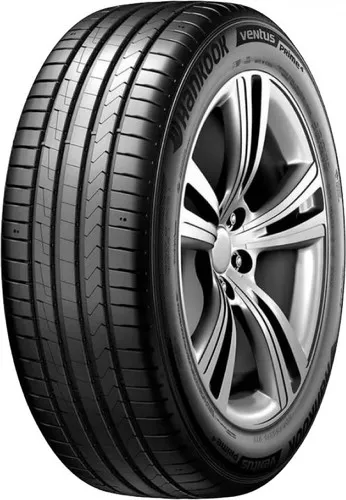
The Hankook Ventus Prime 4 was built to a different brief. As the successor to the Ventus Prime3 K125, it positions itself as an everyday premium tyre that delivers genuine safety performance at an accessible price — confident braking, balanced handling, and a character that suits family saloons as readily as spirited drivers. With 97 dimensions spanning R13 to R22, the Hankook is more focused in intent, and independent tests have placed it near the top of highly competitive group evaluations.

The single biggest difference between these two tyres reveals itself the moment rain falls. The Continental EcoContact 6's efficiency-first construction pays a steep price in wet-weather safety, producing braking distances and aquaplaning figures well below what the premium badge implies. The Hankook, by contrast, is a genuinely balanced performer whose wet credentials are as strong as its dry ones. In both shared head-to-head tests, the result was emphatic: Hankook 2nd, Continental 23rd and 19th respectively. For most drivers in most real-world conditions, understanding why that gap exists is a matter of genuine importance.

Continental EcoContact 6
подходяща за
High-mileage commuters optimising fuel economy Motorway drivers seeking maximum tread longevity Drivers who prioritise low cabin noise Eco-conscious buyers wanting an EU A fuel label
не е идеална за
Drivers needing short wet braking distances Anyone frequently encountering standing water Spirited drivers wanting responsive handling
Hankook Ventus Prime 4
подходяща за
Safety-conscious drivers on mixed road types Drivers in wet climates needing confident braking Spirited drivers valuing sharp dry handling Everyday drivers wanting balanced safety and value
не е идеална за
Drivers optimising purely for fuel economy Buyers wanting maximum tread longevity Those who prioritise the quietest possible cabin

Test profile

Continental
EcoContact 6
Hankook
Ventus Prime 4
Брой тестове
6
15
Best position
#6
#2
Average position
11.8
6.1
най-нов тест
2026
2026
налични размери
620
176

сравнение на представянето

представяне на мокро
Confidence
Continental EcoContact 6
48%
Continental
EcoContact 6
Hankook Ventus Prime 4
82%
Hankook
Ventus Prime 4
спиране на мокра настилка
Continental EcoContact 6
42%
Hankook Ventus Prime 4
96%
мокра обработка
Continental EcoContact 6
46%
Hankook Ventus Prime 4
88%
Завиване в мокър кръг
Continental EcoContact 6
46%
Hankook Ventus Prime 4
88%
аквапланинг по дължина
Continental EcoContact 6
57%
Hankook Ventus Prime 4
76%
аквапланинг при странично движение
Continental EcoContact 6
51%
Hankook Ventus Prime 4
60%

The wet-road comparison is where this matchup becomes a genuine safety discussion. In the single measured wet braking test from the 2022 Autobild 51-tyre shootout, the Hankook stops from 100 km/h in 27.8 metres against the Continental's 32.7 metres — a gap of 4.9 metres from 1 measured wet braking test, nearly a full car length. In a real-world emergency stop at 100 km/h in the rain, a driver on Continental EcoContact 6 tyres arrives at the hazard at roughly the speed the Hankook driver was doing when they had already stopped. The Continental's wet braking score of 60.7 versus the Hankook's 81.1 — a 20-point gulf — makes this one of the most significant wet safety differentials in the premium segment.

The aquaplaning figures compound the concern. The Continental scores just 49.1 for aquaplaning resistance — well below the class average and the most alarming figure in its entire scorecard. The Hankook scores 74.4 overall, with a longitudinal aquaplaning speed score of 78.9, meaning it maintains control at substantially higher speeds as standing water accumulates. Continental's reviewers have been candid: the rolling-resistance-optimised construction creates structural deficits in wet properties, including longer braking distances even on dry tarmac. This is the engineered consequence of designing a tyre primarily around fuel efficiency, not an incidental flaw. The EU wet grip label confirms it: 55% of Continental EcoContact 6 sizes carry a B rating with only 35% achieving A, while 54% of Hankook Ventus Prime 4 sizes are A-rated.

In sustained wet cornering the Hankook consolidates its advantage further. Its wet handling score of 84.7 and wet circle cornering of 86.2 describe a tyre that remains composed and predictable through extended corners in the rain — not merely competent in straight-line emergency braking. The Continental's overall wet score of 51.3 is difficult territory for any premium product, and the second shared test — Continental 19th of 21 (rated "satisfactory"), Hankook 2nd ("exemplary") — confirms this is a consistent pattern. For drivers in northern Europe, the British Isles, or any market where wet summer roads are routine, these numbers carry real consequences.

представяне на сухо
Confidence
Continental EcoContact 6
65%
Continental
EcoContact 6
Hankook Ventus Prime 4
91%
Hankook
Ventus Prime 4
сухо спиране
Continental EcoContact 6
79%
Hankook Ventus Prime 4
90%
обработка в сухо състояние
Continental EcoContact 6
51%
Hankook Ventus Prime 4
92%

On dry tarmac, the gap between these two tyres is narrower than the wet story suggests. In the single available measured dry braking test — the 2022 Autobild 51-tyre 215/55 R17 shootout — the Hankook stops from 100 km/h in 35.8 metres against the Continental's 36.4 metres, a difference of just 0.6 metres from 1 measured dry braking test — roughly half a car width, negligible in everyday use. Zoom out to the full rankings, however, and the capability gap becomes apparent: the Hankook placed 2nd overall while the Continental finished 23rd, reflecting how dry performance integrates with steering response, handling composure and lane-change agility across a complete test programme.

The detailed scores explain the divergence. The Hankook's objective dry handling score of 97.5 and dry handling score of 83.7 are among the strongest figures in the segment. Owners consistently describe a tyre that needs no warm-up, refuses to understeer, and inspires confidence at the limit — one TyreReviews owner who switched from a Continental Sport Contact 2 noted the Hankook's handling limit was nearly 20 km/h higher. The Continental scores 73.5 for dry handling and 76.5 for dry braking; testers repeatedly noted delayed turn-in response and a tendency to understeer when cornering with any urgency. Its dry-lane-change score of 89 is creditable in straight-line obstacle avoidance, but under sustained cornering load the character is noticeably less communicative.

The root cause lies in construction philosophy. The EcoContact 6's compound minimises tyre deformation to reduce rolling resistance — the same property that limits lateral grip at the handling limit. For urban and motorway drivers who rarely explore a tyre's dynamic limits, this trade-off is effectively invisible: the Continental feels composed and predictable at everyday speeds. For anyone driving with enthusiasm on winding roads, the Hankook's more immediate steering and higher cornering threshold will be apparent from the first roundabout. The dry braking difference is small; the handling character difference is not.

комфорт и шум
Confidence
Continental EcoContact 6
91%
Continental
EcoContact 6
Hankook Ventus Prime 4
71%
Hankook
Ventus Prime 4
външен шум
Continental EcoContact 6
95%
Hankook Ventus Prime 4
76%
комфорт при шофиране
Continental EcoContact 6
86%
Hankook Ventus Prime 4
66%

Ride comfort is very close between these two tyres: the Hankook scores 80.0 against the Continental's 78.0 — a marginal real-world difference. The more meaningful distinction is cabin noise. The Continental's interior noise score of 82.5 gives it a genuine edge over the Hankook's 77.0, and this is one of the few categories where the Continental's construction philosophy actively benefits the driver. Heureka buyers award the EcoContact 6 a strong 9.5/10 from 219 reviews and repeatedly cite low road noise as a standout attribute. The Hankook was flagged as the loudest tyre in one eight-car comparison at 75.5 dB; its 91/100 TyreReviews average from 37 owners suggests most find the noise acceptable, but buyers who prioritise cabin refinement should note the gap. The Continental's TyreReviews score of 51/100 from 95 reviews is notably lower, likely reflecting dissatisfaction with wet performance rather than comfort per se.

Running costs are where the Continental reclaims the argument most powerfully. Its rolling resistance score of 100 — a perfect figure — is the best in the segment, and 55% of its dimensions carry a fuel economy A label versus just 10% for the Hankook (whose 52% of sizes sit at C). Over a full year's driving, that difference is tangible at the pump. The Continental's mileage score of 88.5 against the Hankook's 74.2 points to materially longer tread life; one TyreReviews owner reported just 1mm of wear after 9,000 km — implying well over 50,000 km of service from full tread depth. The Hankook's own reviewers flag moderate mileage as a weakness, and its EU fuel economy label is predominantly C. For a driver covering 25,000 km annually, the Continental's economy and longevity advantage could comfortably offset any purchase price premium over a two-year ownership cycle.

One caveat to the Continental's longevity story: multiple buyers have flagged the initial tread depth of just 6.5mm as shallow from new — a Golf TDI owner on TyreReviews noted this directly, and another Astra driver reported impressive stability at 200 km/h on long motorway runs after 9,000 km, suggesting strong motorway composure. The 6.5mm starting depth limits the absolute kilometre total despite the efficient wear rate. The Hankook's broader dimension range of 97 sizes from R13 to R22 also gives it a fitment advantage for less common wheel sizes.

икономия
Confidence
Continental EcoContact 6
89%
Continental
EcoContact 6
Hankook Ventus Prime 4
81%
Hankook
Ventus Prime 4
съпротивление при търкаляне
Continental EcoContact 6
100%
Hankook Ventus Prime 4
84%
пробег
Continental EcoContact 6
77%
Hankook Ventus Prime 4
77%

графика на представянето (паяк)

Tread pattern comparison

Continental EcoContact 6
Hankook Ventus Prime 4
Drag to compare · Scroll to zoom · Double-click for 2×

заключение

The head-to-head record is unambiguous: Hankook Ventus Prime 4 wins both shared tests, finishing 2nd while the Continental placed 23rd of 51 in the braking shootout and 19th of 21 in the group test. The Hankook is the safer, more capable tyre on the road conditions that matter most, and it is competitive on dry roads too. The 4.9-metre wet braking advantage at 100 km/h is not a test footnote: it is the difference between stopping before a hazard and striking it. For drivers who encounter regular rainfall, use motorways in summer rain, want confidence across all conditions, or simply cannot accept a major safety compromise in exchange for fuel savings, the Hankook Ventus Prime 4 is the correct choice. Its TyreReviews community score of 91/100 from real owners underlines the satisfaction it delivers in everyday use.

The Continental EcoContact 6 makes its strongest case for a specific, valid driver profile: the high-mileage motorway commuter for whom fuel consumption and tyre longevity are dominant priorities, who drives in a controlled manner and avoids situations that demand dynamic wet performance. Its rolling resistance and mileage scores are class-leading, its cabin refinement is superior, and the fuel-economy benefit is real money over the tyre's life. A driver covering 30,000 predominantly motorway kilometres per year, driving conservatively in all weather, could rationally choose the Continental and emerge ahead on total ownership cost — but must do so knowing that a 4.9-metre wet braking deficit and an aquaplaning score of 49.1 demand longer following distances every time it rains.

The recommendation is straightforward. If safety and balanced all-conditions performance matter — as they should for the majority of drivers — choose the Hankook Ventus Prime 4. If fuel economy and longevity are your overriding priorities and you drive conservatively, the Continental EcoContact 6 will deliver outstanding efficiency and a long, quiet ownership experience. Just leave more space when it rains.
тестове, използвани в сравнението

организациясезонгодинаразмер
AutobildAutobild
лято
2022215/55 R17преглед

размери и цени

сравнете цените за всички налични размери на тези гуми.

размер Continental EcoContact 6 Hankook Ventus Prime 4 %
205/55 R16
205/55 R16
205/55 R16
205/55 R16
205/55 R16
виж общото сравнение

добавете към сравнението

Popular brands
ново сравнение

GumiLab.eu

ВЗЕМИ

GumiLab.eu

Сравнете гуми, прочетете тестови резултати и намерете най-добрите цени — всичко в едно приложение.